
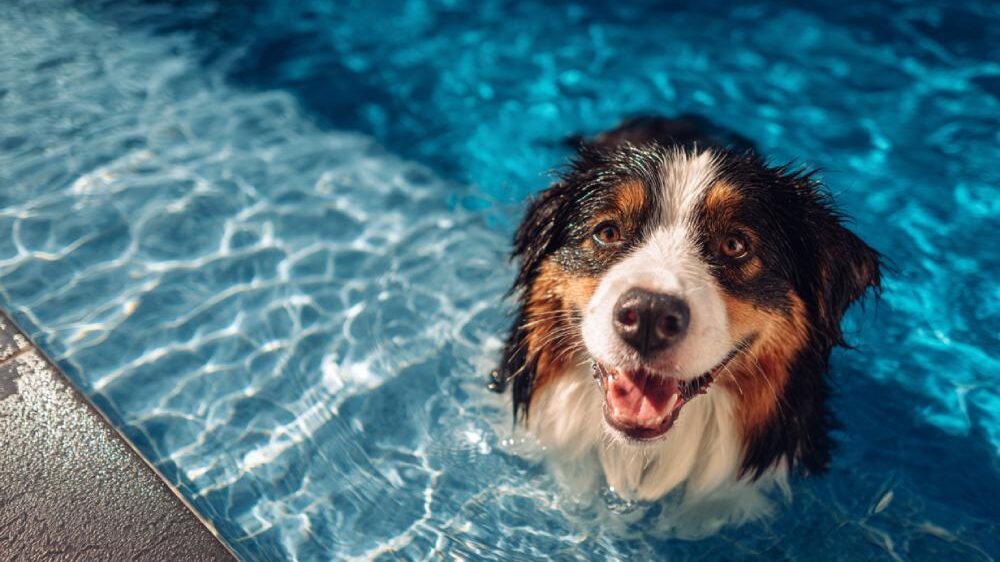
For Perth families, the pool is less “showpiece” and more “backyard headquarters” – dogs launch off the steps, kids drag inflatables around the edge, and sun loungers creep closer to the water every summer. That day-to-day rough and tumble is exactly where the differences between vinyl liners and fibreglass really show up.
If you own a vinyl-lined pool and are wondering whether it is worth converting to fibreglass, it helps to look beyond brochure photos and focus on how each surface actually copes with claws, toys, and years of family use.
How claws, toys and sun loungers treat vinyl liners vs fibreglass gelcoat
Vinyl liners: tough, but easy to puncture
Vinyl liners are typically only a fraction of a millimetre thick, which means they can be vulnerable to sharp points and rough play. In a real-world Perth backyard, that can look like:
- Dogs scrambling on the steps or pushing off the floor with their claws
- Hard plastic toys, boogie boards or pool vac heads scraping the liner
- Metal or hard plastic sun loungers being dragged too close and catching the edge
Small punctures can be patched, but each repair is another weak point and another call-out. Over time, repeated repairs can start to look untidy and may not fully resolve slow leaks, especially if the underlying wall or floor has shifted.
Liner lifespan also reflects this vulnerability. Depending on quality and care, many guides suggest replacement roughly every 5–10 years, sometimes a little longer in ideal conditions. Perth’s strong UV, hot summers and heavy family use tend to push towards the lower end of that range.
Fibreglass gelcoat: built for everyday abuse
Fibreglass shells are factory-moulded and finished with a hard, non-porous gelcoat layer. That gelcoat is specifically designed to handle everyday wear, so pet claws, stray branches and typical play are far less likely to cause damage than on a thin liner.
For families and pet owners, this means:
- Dogs can enter and exit on steps or benches with far less risk of punctures
- Hard plastic toys scraping the surface are unlikely to cause more than superficial scuffs
- Furniture and esky legs still need common sense, but there is no delicate liner lip to protect
Because the shell is structural and the gelcoat is continuous, you are not relying on a thin membrane to hold the water in. With proper installation and chemistry, fibreglass pools are commonly expected to last for several decades before major interior work is needed.
Slip, comfort and safety at steps and entries
When you have kids running in and out of the pool – and a dog charging after them – how the surface feels underfoot matters just as much as durability.
Vinyl: soft underfoot, but can become slippery
Fresh vinyl can feel soft and comfortable, particularly on steps, benches and floors. However, vinyl relies heavily on water chemistry and cleanliness to maintain grip. Many owners find that vinyl steps and floors become noticeably more slippery as microscopic algae films start to form, even before any green tinge is visible.
For families, that can mean:
- Kids losing their footing on the top step
- Extra caution needed for grandparents or anyone with mobility issues
- More frequent brushing and shock treatments to keep slipperiness under control
There are aftermarket coatings and grip products for vinyl steps, but they are essentially workarounds to overcome the base material.
Fibreglass: smooth, non-porous and slip-resistant
Fibreglass pool shells are engineered to balance comfort and traction. The gelcoat is smooth and non-porous – good for bare feet and easy cleaning – but manufacturers texture steps, benches and shallow ledges to create a slip-resistant finish.
Key safety advantages for a Perth family include:
- Built-in steps and benches with moulded, non-slip treads
- Consistent surface texture across the pool (no mix of plastic steps and liner)
- Less algae growth on the non-porous surface, which helps maintain grip
- A smoother, more comfortable feel if kids spend half the day on the steps
In practice, that means fewer “near misses” when wet, sandy feet rush back into the pool and a generally more forgiving, predictable surface for all ages.
The cost of “little accidents” over 5–10 years vs a single conversion
A lot of Perth vinyl pool owners only look at the initial price gap between keeping their liner and converting to fibreglass. The better question is: “What will this pool cost me over the next decade if my kids, dog and friends keep using it the way they do now?”
Vinyl liner over 5–10 years
Typical cost drivers with a family-used vinyl liner include:
- Puncture and tear repairs
Call-outs to locate and patch small leaks, plus higher water and chemical costs from slow leaks before they are found. - Early liner replacement
Many sources suggest budgeting for at least one liner replacement roughly every 8–10 years, sometimes sooner under heavy use. Vinyl liner replacement can represent a significant spend for a typical inground pool, with larger or more complex pools costing more.
Even if you assume:
- One full liner replacement in 10 years at typical market rates
- A couple of significant repairs over that period
you are usually committing to repeated, sometimes unexpected, outlays just to keep the same vinyl structure going – and that is before any structural issues, coping work or landscaping changes.
Fibreglass conversion: more upfront, less ongoing surface risk
Converting to fibreglass typically has a higher once-off cost than a single liner replacement, but you are fundamentally changing the surface type rather than “putting another band-aid on the same problem”.
With a fibreglass conversion:
- A well-installed fibreglass shell is expected to last for decades with proper care
- The gelcoat surface is far less vulnerable to pet claws, toys and normal rough play than a vinyl liner
- Any future resurfacing is usually about refreshing appearance and fixing isolated issues, not replacing the entire water-holding skin
So over 10 years of family and pet use, the fibreglass option tends to shift your spending from repeated “emergency” and replacement costs towards one larger, planned investment with much lower day-to-day risk. You also gain comfort, safety and maintenance benefits along the way (less algae, easier cleaning, better slip resistance).
When does a conversion make sense for Perth families?
You might seriously consider converting your vinyl pool to fibreglass if:
- Your liner is approaching, or already beyond, 8–10 years old
- You are seeing regular punctures, seam issues or wrinkling that keeps returning
- Your dog is in and out of the pool all summer and you are constantly nervous about claws
- Kids use hard toys, inflatables and pool games most days in the season
- You want a smoother, more slip-resistant step area for young children and older relatives
- You are planning other backyard upgrades and want the pool surface to match the rest of the space in quality and longevity
In that scenario, a conversion is less about “upgrading for looks” and more about matching the pool’s surface to the way your family actually uses it.
Ready for a tougher surface for family life?
If your vinyl-lined pool is starting to show the strain of kids, pets and Perth summers, it may be time to look beyond patches and replacement liners. A fibreglass conversion gives you a tougher, more family-friendly surface that is built to handle real-world rough play while improving comfort and safety.
Ready for a tougher surface for family life?
Explore your options for vinyl pool conversions and see how a fibreglass upgrade could work for your backyard.