
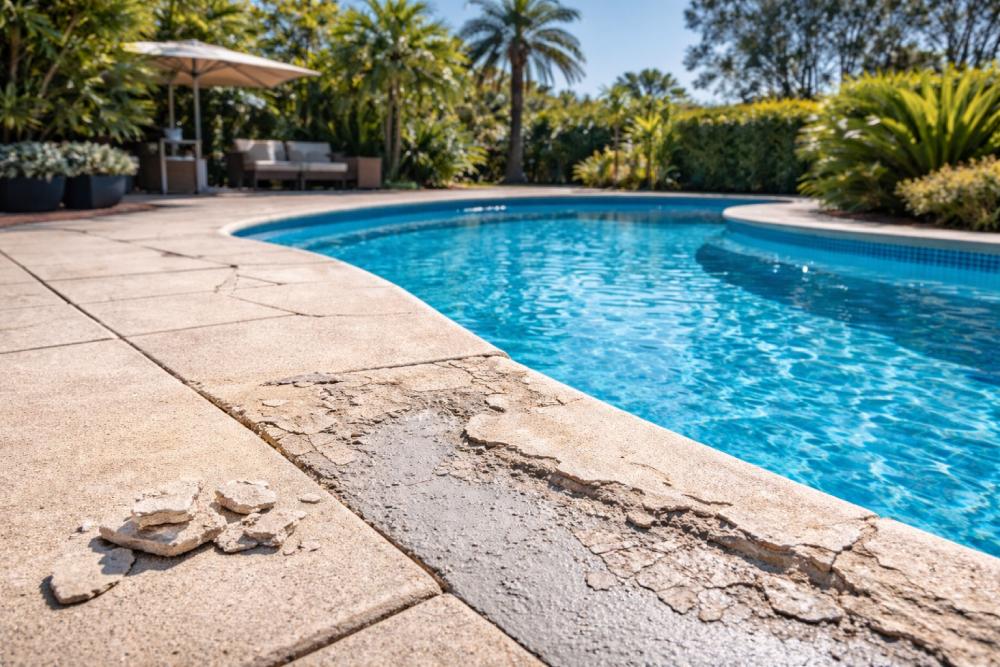
Perth summers are unforgiving on pool surfaces. Long hot spells, harsh UV, higher bather loads and salt or mineral systems can turn small surface issues into constant maintenance (and a pool that’s unpleasant to swim in). If your pool is concrete or vinyl-lined, resurfacing to a fibreglass finish can be a practical way to restore comfort, reduce ongoing patchwork repairs, and improve day-to-day maintenance.
This checklist is designed to help Perth pool owners spot the warning signs early – before you end up dealing with leaks, recurring algae, or urgent repairs when you’d rather be swimming.
Important: Pools 101 resurfaces concrete and vinyl-lined pools to a fibreglass finish. We don’t resurface existing fibreglass pools.
Why Perth summers accelerate surface wear
Most pool surface problems aren’t “sudden”. They build over time, then become obvious when summer conditions put the pool under load:
- UV + heat can degrade finishes and expose weak points, especially where a surface has already thinned or cracked.
- Heavy use (kids, parties, frequent swimming) increases abrasion on steps, ledges and high-traffic areas.
- Chemical swings are more common in hot weather because evaporation and bather load rise, which can accelerate staining and surface breakdown.
- Salt/mineral systems can be hard on compromised surfaces, particularly if there are existing cracks or porous areas.
The 7 signs your pool surface is failing
1) Roughness underfoot (it feels like sandpaper)
If your pool floor or steps feel rough, abrasive or uncomfortable to walk on, it usually means the surface is breaking down. For concrete pools, this can show up as exposed aggregate, pitting, or worn plaster. For vinyl-lined pools, it may present as liner wrinkling, thinning, or small defects that catch on feet.
Why it matters: Rough surfaces aren’t just annoying – they can cause grazes, and they tend to hold dirt and algae more easily, which increases cleaning time.
2) Staining that keeps returning (even after a proper clean)
Some staining is cosmetic, but recurring staining is often a sign that the surface has become porous or compromised. In Perth, high UV and warm water can encourage rapid algae growth, and porous surfaces make it harder to fully remove the source of the problem.
Why it matters: When stains return quickly, owners often respond by increasing chemical use. That can become an expensive cycle, and it doesn’t address the underlying surface condition.
3) Cracks, crazing, flaking or peeling
Concrete pools commonly develop surface cracking or “crazing” as the finish ages. Flaking or peeling can indicate the surface layer is delaminating (separating), especially around steps, corners, returns and skimmer areas.
Why it matters: Cracks and delamination rarely improve on their own. Summer heat can expand and contract materials, widening cracks and letting water track into weak points.
4) Algae that keeps coming back (especially in the same spots)
If you’re brushing constantly and algae keeps returning in the same areas, it can be a surface issue rather than a “maintenance issue”. Porous or worn surfaces give algae a place to anchor, which makes outbreaks more frequent and harder to eliminate.
Why it matters: Repeated algae blooms are a time sink, they can affect water clarity fast in hot weather, and they often trigger chemical overcorrection that makes the water harder to balance.
5) Vinyl liner tears, wrinkles or seam issues
For vinyl-lined pools, wrinkles, lifting seams, thinning areas or small tears are early warning signs that the liner is reaching the end of its usable life. Perth heat can make liners expand and contract, and heavy use (especially in summer) increases the risk of punctures and tears.
Why it matters: Small liner issues can turn into larger failures quickly – and once you’re patching repeatedly, you’re usually paying to keep a tired surface alive rather than fixing the root problem.
6) Water loss that doesn’t match normal evaporation
Yes, Perth summer evaporation is real – but if you’re topping up more than usual, and you’ve ruled out obvious equipment leaks, surface cracks or liner defects may be contributing.
Why it matters: Water loss can indicate a problem that gets worse under heat and usage. It can also throw off your chemical balance more often, which accelerates staining and algae risk.
7) You’re stuck in a patchwork cycle (repairs are becoming routine)
If you’ve reached the point where you’re constantly patching, rebalancing, scrubbing, or calling for “small fixes”, that’s usually the clearest signal. A pool that needs ongoing intervention often has a surface that’s no longer doing its job.
Why it matters: Patchwork can make sense short-term, but over a season it often costs more (time + money) than owners expect – and you still end up resurfacing later, usually under more pressure.
Resurfacing vs renovation: how to tell what you need
Not every pool needs a full renovation. In many cases, resurfacing is enough to restore comfort and reduce maintenance. The difference comes down to whether the issue is primarily the surface or whether there are broader structural or functional problems.
Resurfacing is often enough when:
- The pool structure is sound, but the finish is worn, stained, rough, or cracked.
- You want a more durable surface and easier ongoing maintenance.
- You have a vinyl-lined pool and want an alternative to repeated liner repairs.
A renovation may be the better fit when:
- There are major structural issues beyond surface cracking.
- You want to change features (steps, benches, fittings) or upgrade pool functionality.
- Access, drainage, or surrounding areas need work at the same time.
If you’re unsure which bucket you’re in, an inspection is the fastest way to stop guessing.
What “resurfacing to fibreglass” means at Pools 101
When Pools 101 talks about resurfacing, we’re referring to resurfacing concrete and vinyl-lined pools to a fibreglass finish. This is not the same as resurfacing an existing fibreglass shell (which we don’t do).
If you’re exploring options, these pages explain the services in detail:
- Pool resurfacing in Perth (concrete/vinyl to fibreglass)
- Vinyl pool conversions (vinyl-lined to fibreglass)
- Concrete pool conversions (concrete to fibreglass)
- Pool renovations (scope upgrades and broader works)
What to do next (simple decision path)
- 0–2 signs: Monitor, maintain properly, and keep an eye on repeat issues (especially algae hot spots or early cracks).
- 3–4 signs: You’re likely moving into “surface failure” territory – start comparing resurfacing vs conversion options.
- 5+ signs: You’re probably in a patchwork cycle. An inspection will clarify whether resurfacing/conversion is the most efficient fix.
Practical Perth timing tip: If you’re planning work, don’t assume every week is ideal for surface work – weather and drying conditions matter. Booking outside peak demand can also give you more scheduling flexibility.
FAQ
How long does resurfacing take in Perth?
It depends on pool size, access, prep work required and – critically – weather conditions. Dry conditions are important for coating work, so timelines can shift if rain or humidity interrupts the process.
Can resurfacing fix leaks?
Some leaks are surface-related (cracks, defects), while others are plumbing or equipment-related. If you’re losing water, a proper inspection helps identify the cause before you commit to surface work.
How often should a pool be resurfaced?
There’s no universal schedule, but many owners look at resurfacing when the surface is rough, stained, cracking, or maintenance becomes disproportionately time-consuming. Condition matters more than age.
Do you resurface existing fibreglass pools?
No. Pools 101 resurfaces concrete and vinyl-lined pools to a fibreglass finish. We don’t resurface existing fibreglass pools.
Ready to stop guessing?
If you’re seeing multiple signs from the checklist, the next move is simple: get the pool inspected and scoped properly. You’ll get clarity on whether you need resurfacing, a conversion, or a broader renovation – and you’ll avoid spending another Perth summer stuck in a patch-and-scrub cycle.
Explore your options: Pool resurfacing, vinyl pool conversions, or concrete pool conversions.